T-N.T. WE-SCAR Kit Guide|Adjustment & Notes
What Should You Check Before Installing the WEPSTAS HOP Chamber on a WE-SCAR?
【T-N.T. WEPSTAS Kit Guide|Adjustment & Notes】
The T-N.T. WEPSTAS Retrofit Kit is precisely engineered based on original factory specifications, allowing direct installation onto compatible factory platforms while maintaining excellent structural fitment and operational stability under standard configurations.
Compatible Platforms:
• WE PDW (EMG KAC PDW-M2)
• WE SCAR-L
• WE SCAR-H
• WE THOMPSON
• WE AK74
• WE AK-PMC
• WE SVD
If your system is already equipped with aftermarket components such as the WE SCAR loading nozzle assembly (#201), mechanism parts (#198), or chamber retainer (#194), slight modification or adjustment may still be required during installation.
Due to dimensional tolerances and structural differences between aftermarket brands, actual fitment and operational smoothness may vary depending on the overall configuration.
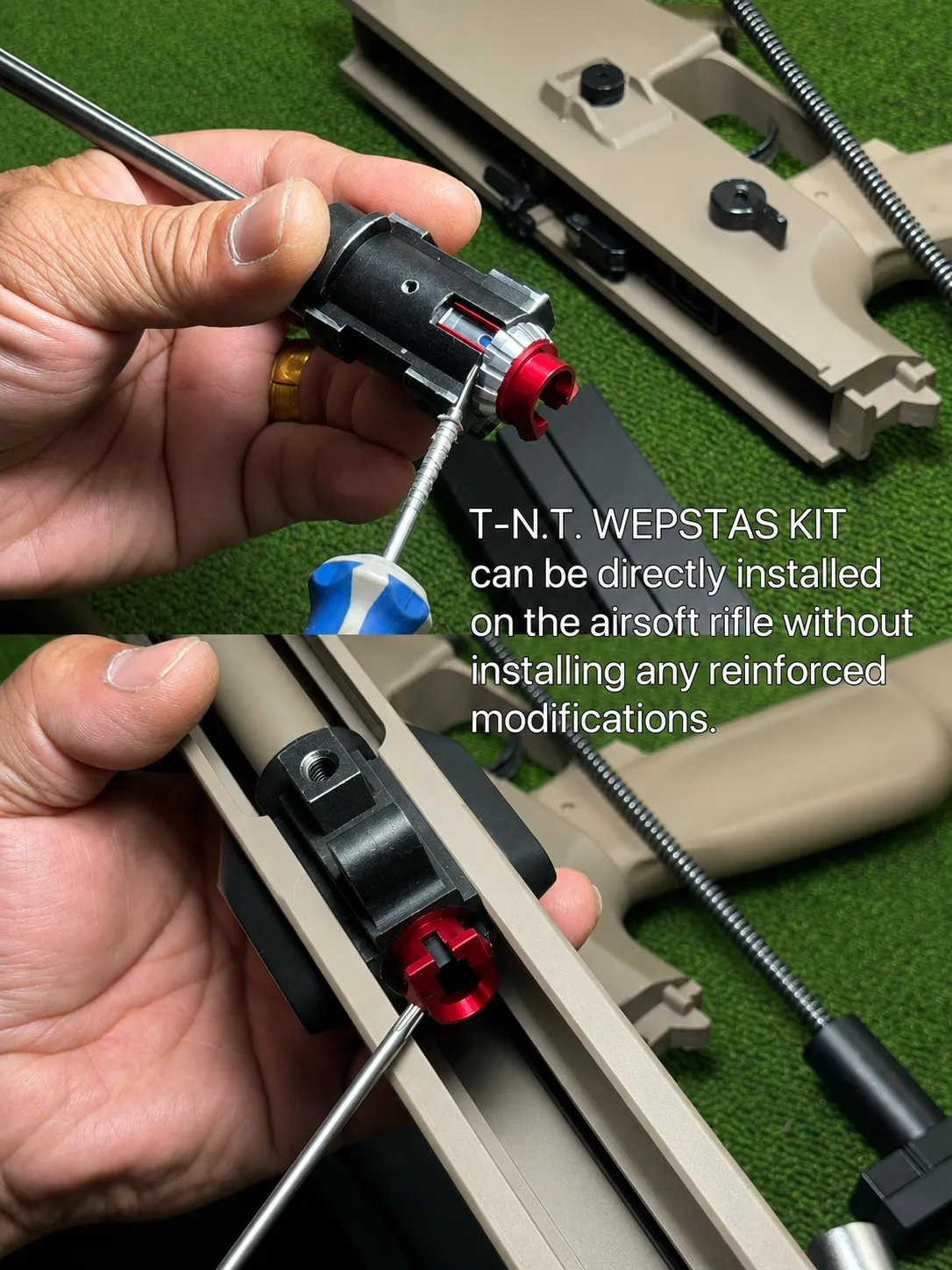
【Installation Notes】
During installation, please loosen the chamber retainer screws first, then press the adjustment ring downward approximately 2 mm to create sufficient clearance before positioning and installing the HOP chamber.
Please carefully confirm that the adjustment ring is fully pressed into the correct position before installation.
As shown in the illustration:
Top:
Correct installation position
Bottom:
Incorrect installation position
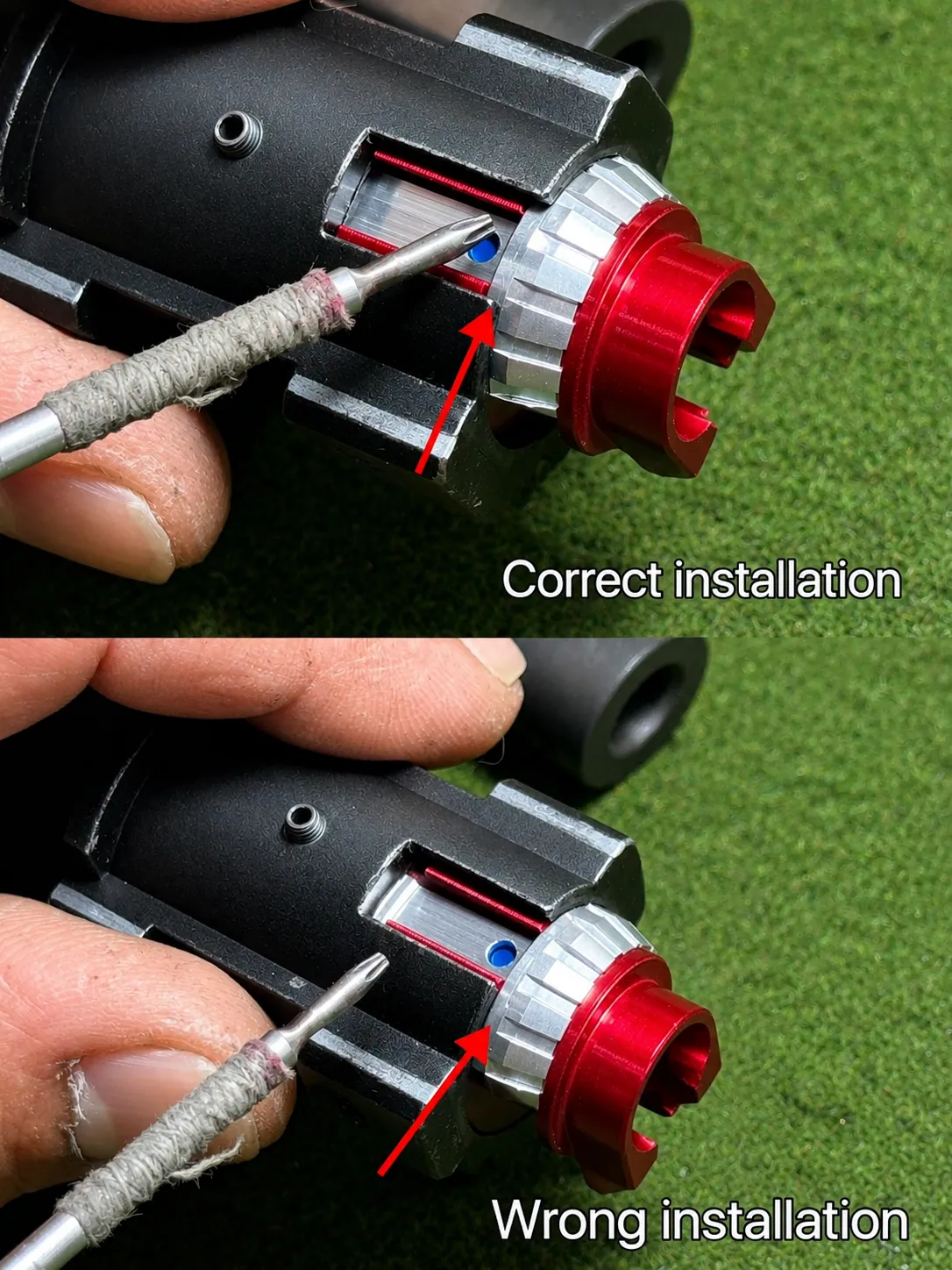
If the adjustment ring is not fully seated, the following issues may occur:
• Improper HOP chamber positioning
• Assembly interference
• Unstable operation
• Abnormal stress applied to the HOP chamber
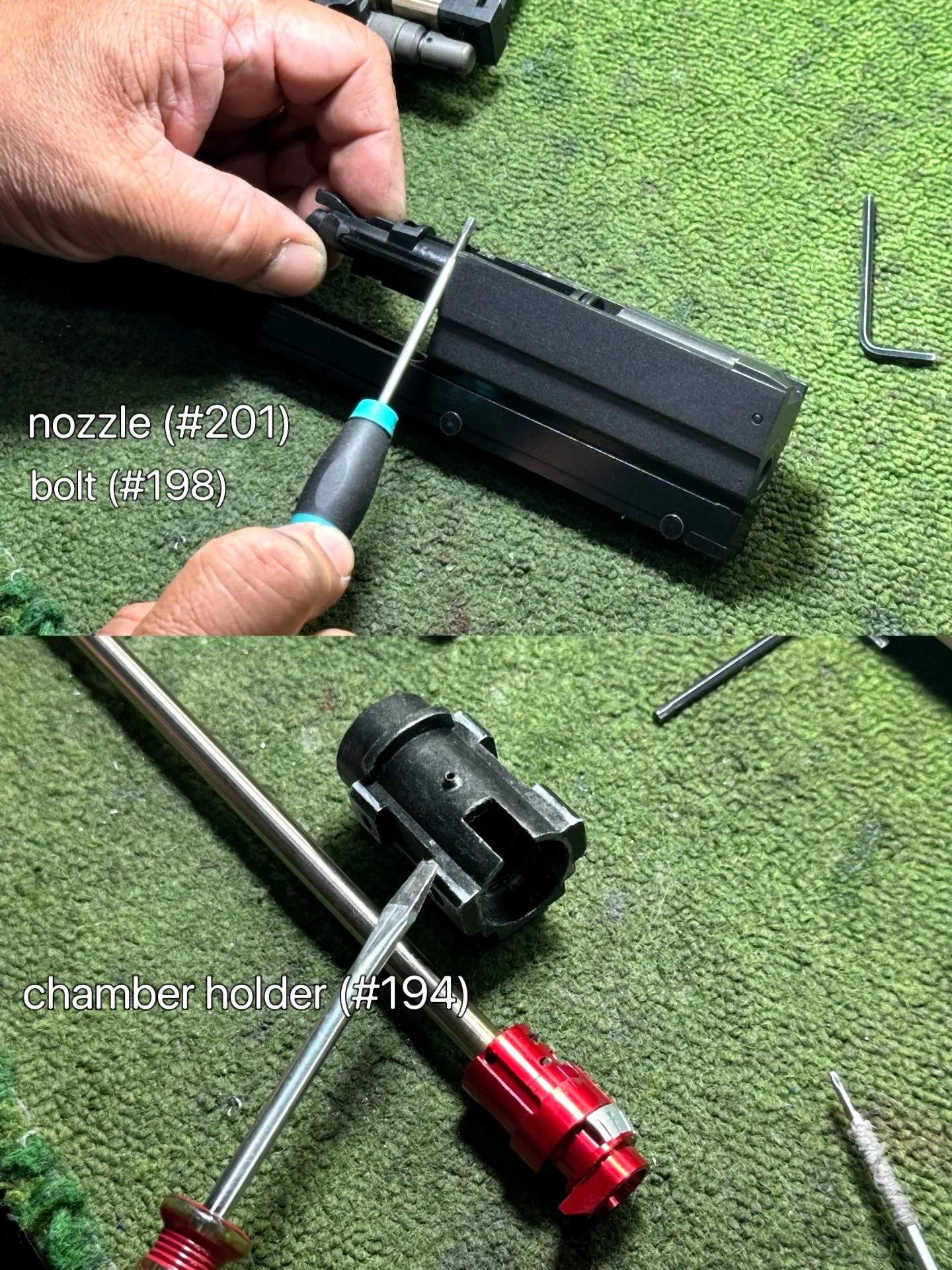
(#201 / #198 / #194 Parts Reference)
All T-N.T. products are designed based on original factory specifications.
If your system is equipped with reinforced or non-factory aftermarket components, basic DIY fitting knowledge or professional installation is recommended to avoid tolerance-related interference or operational issues.
Proper installation and adjustment allow the WEPSTAS Retrofit Kit to deliver improved operational stability, better structural fitment, and more consistent overall performance.