Aftermarket Nozzle Compatibility Issues
Why Do Some Aftermarket Nozzles Cause Damage?
【Aftermarket Nozzle Compatibility & HOP Chamber Fitment Issues】
Some players choose to install aftermarket nozzles to achieve different air seal performance or cycling characteristics.
However, because certain aftermarket nozzles may differ from original factory specifications, they can create excessive contact pressure with the HOP chamber or bucking after installation.
Different brands and manufacturers often use different dimensions, tolerances, and outer diameter designs. As a result, even if installation appears normal, the contact pressure may still fall outside the intended design range.
When excessive pressure occurs between the nozzle, HOP chamber, and bucking, long-term use may lead to:
• Abnormal wear on the contact surface between the nozzle and bucking
• Increased feeding resistance
• Unstable BB alignment
• Excessive stress on the HOP chamber structure
• Cracking, loosening, or damage to the bucking or HOP chamber over time
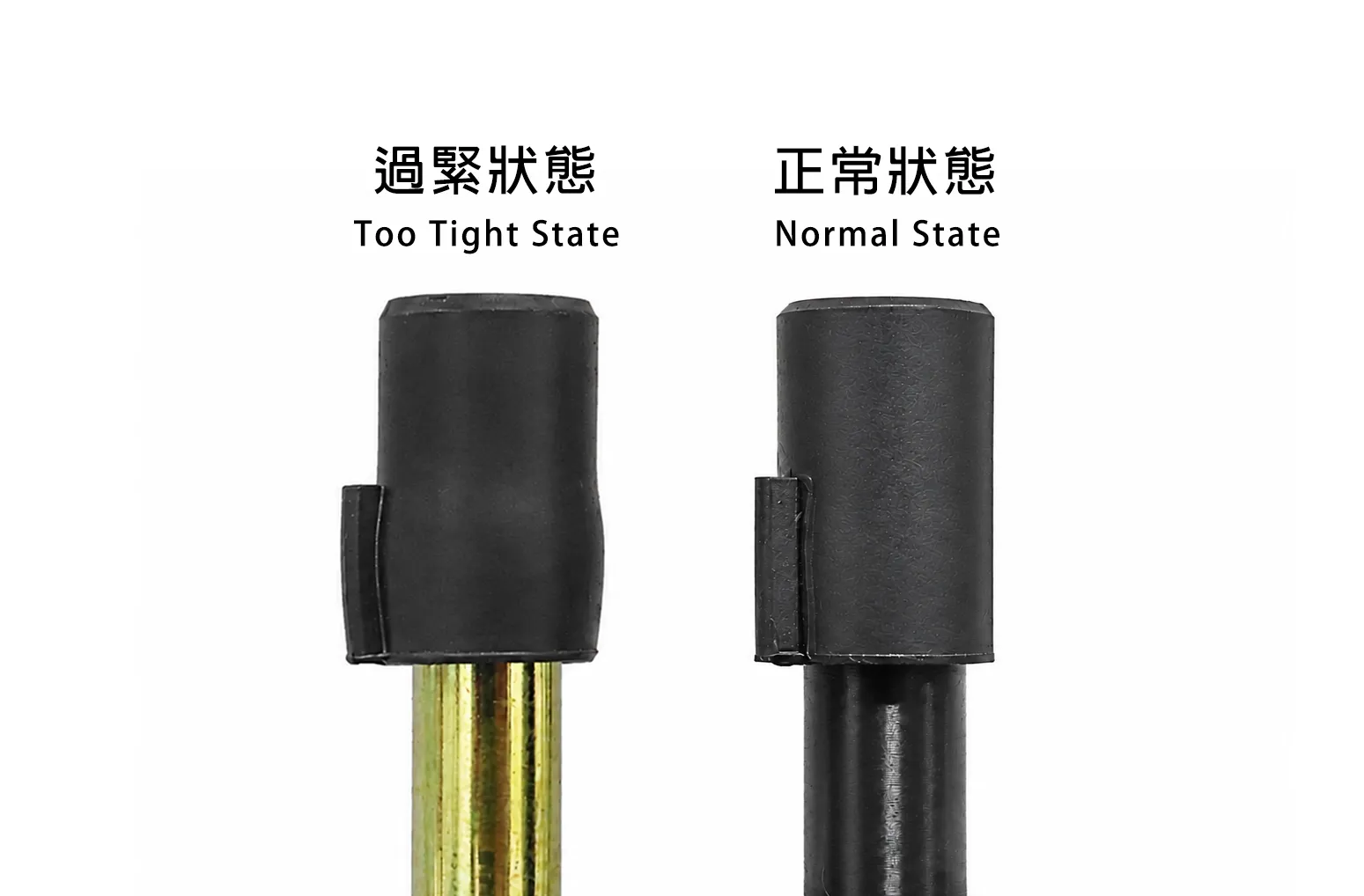
This issue is even more common on sniper rifle platforms.
In pursuit of better air seal performance, some players intentionally reduce internal clearance or increase contact pressure. While this may temporarily improve air seal efficiency, it can also lead to increased wear, higher operating resistance, and feeding stability issues over time.
Continuous operation under excessive friction may further accelerate component wear, negatively affecting feeding consistency and overall shooting performance.
For this reason, when using aftermarket nozzles, we recommend not only lightly polishing the nozzle edge to reduce friction against the bucking, but more importantly selecting a nozzle with the correct diameter and proper dimensional specifications.
If the outer diameter of the nozzle is too large, it may still create excessive contact pressure even when installation appears normal. Over time, this can cause abnormal bucking wear, increased cycling resistance, reduced feeding stability, and shortened component lifespan.